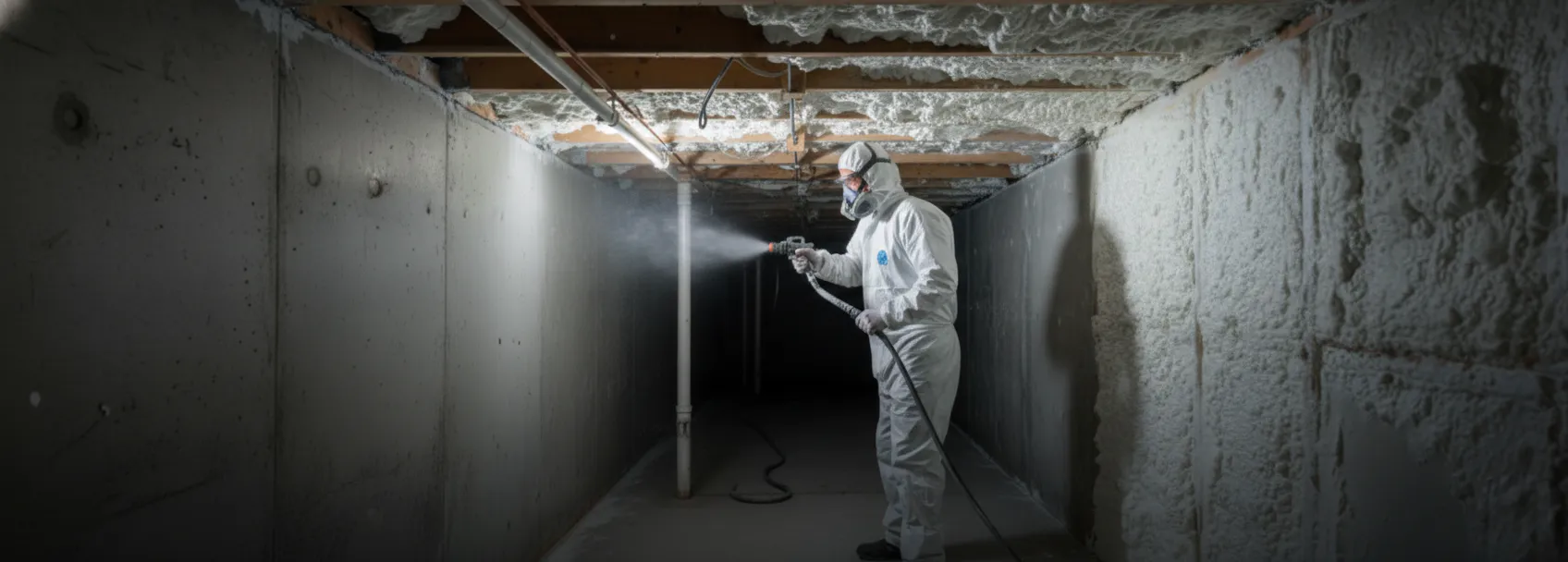
Controls Moisture & Prevents Mold: Crawl spaces naturally collect moisture from the ground and outside air. Without insulation and air sealing, humidity rises into your home—creating a perfect environment for mold growth, musty odors, and wood rot. Proper insulation keeps moisture out and protects your home's structure.
Michigan Weather Makes It Worse: Cold winters, humid summers, and rapid temperature swings cause condensation under your home. Spray foam insulation creates a thermal and moisture barrier that stays effective year-round, even during Michigan's harsh freeze-thaw cycles.
Warmer Floors & Better Comfort: Uninsulated crawl spaces allow cold air to seep into the floor system. This results in chilly floors in winter and uneven temperatures throughout your home. Insulating the crawl space stops drafts and dramatically improves comfort.
Improved Energy Efficiency: Up to 20–30% of a home's heating and cooling loss comes from below. Insulating your crawl space reduces the workload on your HVAC system and lowers monthly utility bills.
Protects Plumbing & Ductwork: Pipes and ducts in an uninsulated crawl space can freeze, sweat, or deteriorate. Insulation shields them from extreme temperatures, preventing damage and costly repairs.
Increases Home Value & Air Quality: Because nearly 50% of the air you breathe comes from your crawl space, sealing it reduces allergens, dust, pollen, and moisture that get pulled into your home. A well-insulated crawl space is a major selling point for homebuyers and protects your home long-term.

Learn how proper crawl space insulation seals moisture, improves comfort, and reduces energy costs across Michigan. Professional crawl space insulation installation protects your home's foundation and improves indoor air quality.
Spray foam is typically the best option for Michigan homes because it seals air leaks, blocks moisture, and resists mold. Professional crawl space insulation with spray foam creates an effective barrier that prevents air infiltration and moisture intrusion. Fiberglass can absorb moisture and sag over time, making it less reliable in our climate. The U.S. Department of Energy recommends proper crawl space insulation as part of a comprehensive home energy efficiency strategy, and the Environmental Protection Agency (EPA) emphasizes that controlling moisture through proper crawl space insulation helps prevent mold growth and indoor air quality issues.
Most Michigan homeowners pay $1,500–$6,000 for crawl space insulation, depending on size, condition, and materials used. Professional crawl space insulation installation costs vary based on the type of insulation chosen—spray foam, rigid foam board, or fiberglass. Spray foam crawl space insulation costs more upfront but lasts longer and offers higher energy savings. The investment in quality crawl space insulation pays for itself through reduced utility bills and improved home comfort. Request a free estimate to see your exact crawl space insulation project cost.
Yes. Proper crawl space insulation can reduce heating and cooling costs by 20–30%, especially in older homes with cold floors or high humidity levels. Installing crawl space insulation creates a thermal barrier that prevents conditioned air from escaping and unconditioned air from entering your home. The Energy Star program recognizes that effective crawl space insulation is one of the most impactful energy efficiency improvements homeowners can make. Additionally, crawl space insulation helps maintain consistent indoor temperatures, reducing the workload on your HVAC system and lowering monthly energy bills.
Encapsulated or sealed crawl spaces should have insulated walls, not ceilings. This approach, called closed crawl space insulation, creates a conditioned space that prevents moisture issues and improves energy efficiency. If the crawl space is vented, the ceiling should be insulated with crawl space insulation. A professional inspection will determine the correct crawl space insulation method for your home. The Building Science Corporation recommends wall insulation in encapsulated crawl spaces to create a more energy-efficient building envelope, while vented crawl spaces typically require ceiling insulation to prevent cold air from rising into living spaces.
Yes. A vapor barrier (crawl-space encapsulation) stops ground moisture from entering the space. Crawl space insulation and vapor barriers work together to prevent mold, rot, and humidity issues. When installing crawl space insulation, the vapor barrier should be installed first to create a moisture-resistant foundation. This combination ensures that your crawl space insulation performs effectively and maintains its insulating properties over time. Proper crawl space insulation installation with an accompanying vapor barrier is essential for long-term moisture control and energy efficiency in Michigan's variable climate.